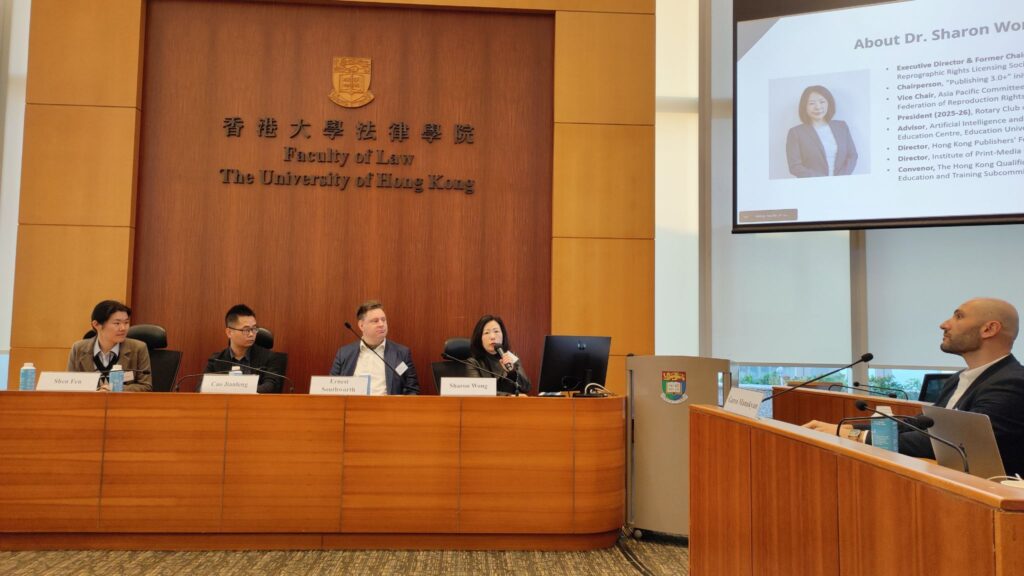
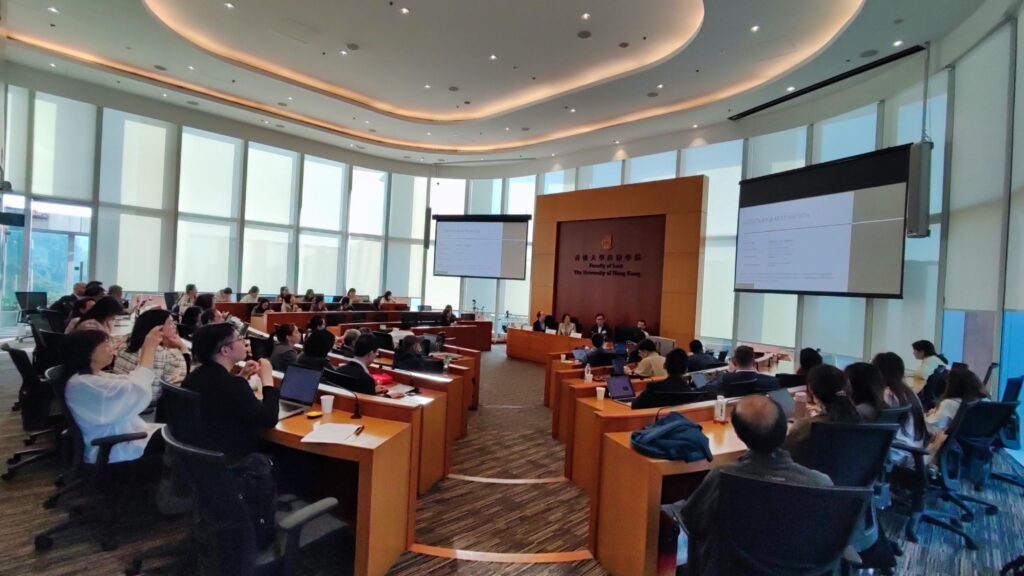
The Symposium on Interpretability of AI-Generated Content Copyright Infringement was held on 12 December 2025, at the University of Hong Kong, organised by the Law and Technology Centre and supported by Hong Kong Applied Science and Technology Research Institute (ASTRI).
The symposium opened with welcome remarks by Professor Hualing Fu, Dean of HKU Faculty of Law, followed by opening remarks from Professor Yahong Li, Dr. Alan Cheung (ASTRI), and Professor Benjamin Chen, underscoring the importance of interdisciplinary collaboration in addressing copyright challenges posed by generative AI.
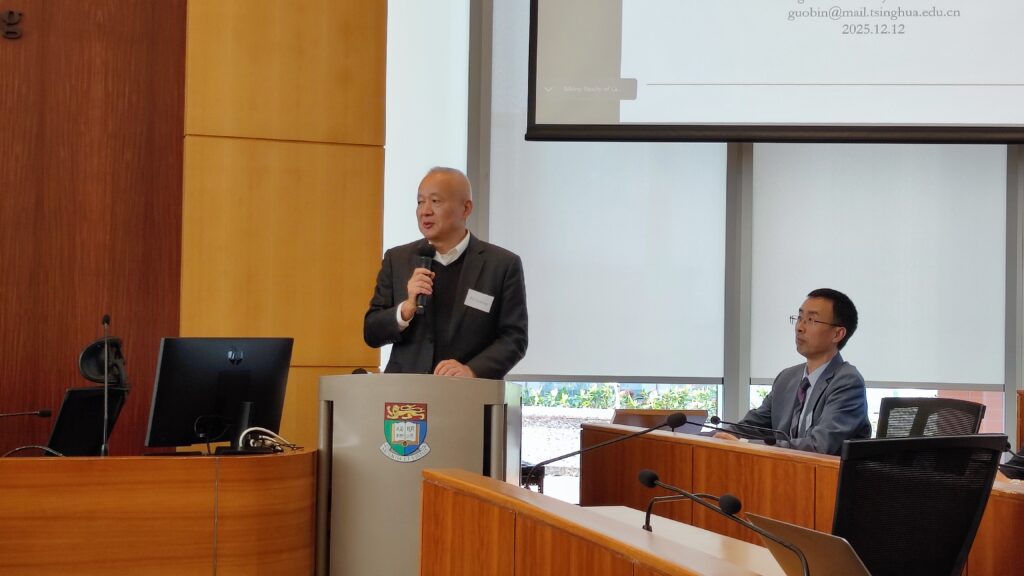
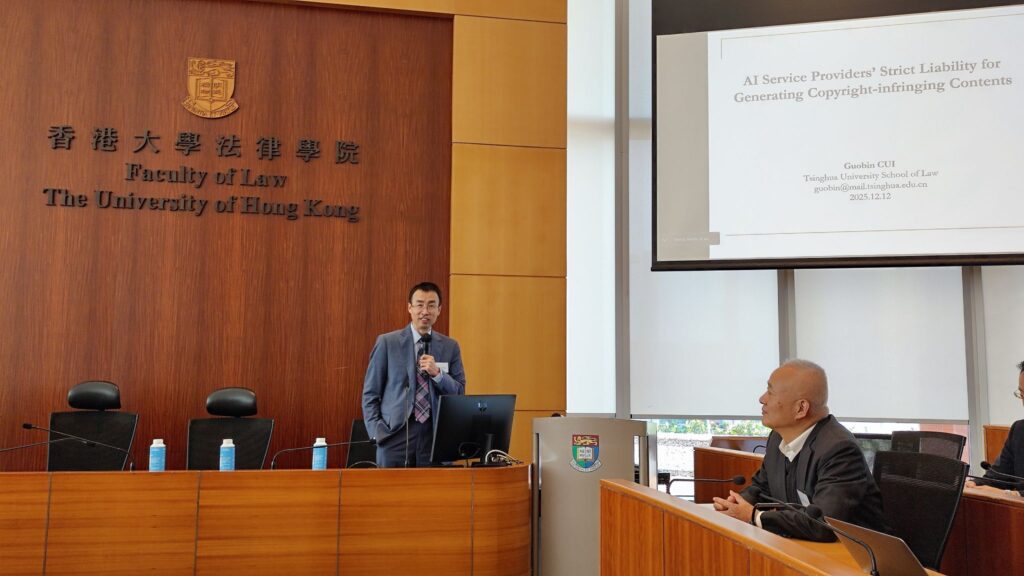
In the keynote session, Professor Cui Guobin, Dean of Tsinghua University School of Law, examined the foundations and limits of strict liability for copyright infringement by generative AI platforms, offering a structured framework for distinguishing system-generated infringement from user-driven conduct.
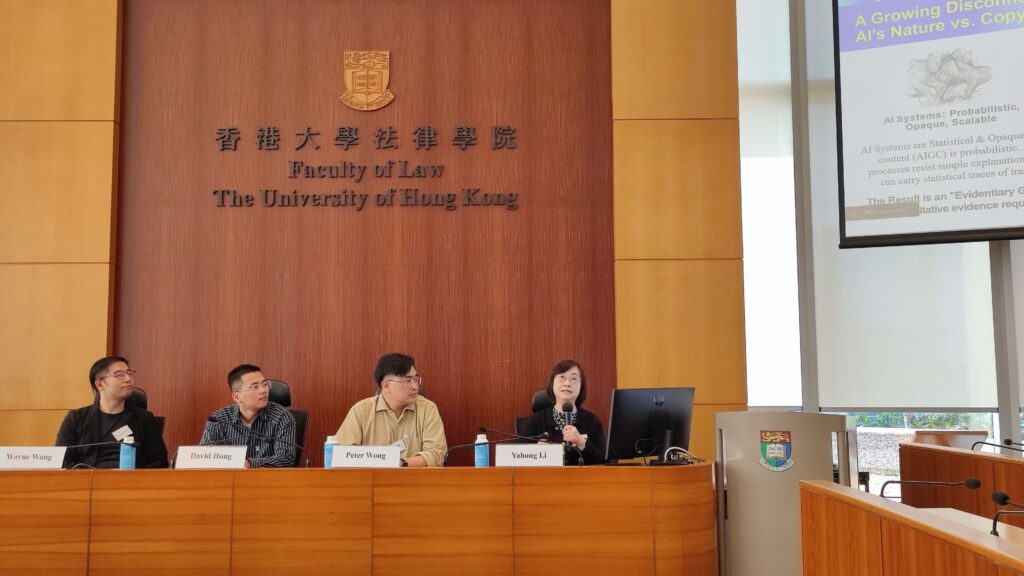
The programme also featured an introduction to the HKU–ASTRI AIGC Copyright Project by Professor Yahong Li, Mr. Peter Wong (ASTRI), Dr. Wayne Wei Wang (HKU & FGV), and Mr. David Hong (ASTRI), showcasing joint research on content traceability, infringement risk identification, and model interpretability, and illustrating how legal analysis and system design can be meaningfully integrated.
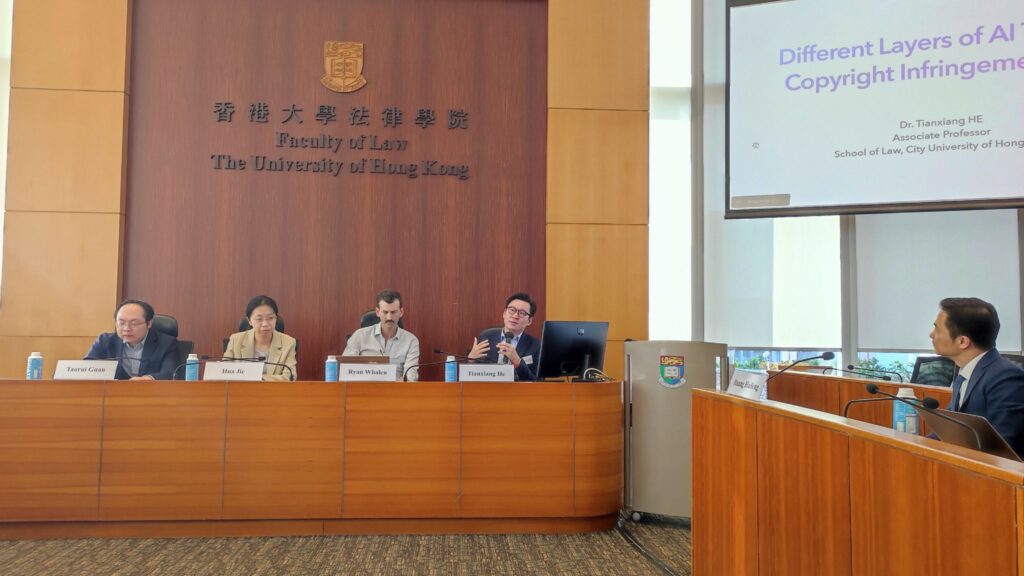
The afternoon panels brought together leading academic and industry perspectives. Moderated by Professor Huaifeng Huang (Jones Day), panel one featured Professor Tianxiang He (CityUHK), Professor Ryan Whalen (HKU), Professor Hua Jie (Tongji University), and Professor Guan Taorui (HKU), examining copyright risks across AI training layers, creativity thresholds in a post-AI world, collective licensing, and the regulation of retrieval-augmented generation (RAG) systems. Moderated by Dr. Garen Manukyan (University of Greenwich), panel two brought practice-oriented insights from Dr. Sharon Wong (HK Reprographic Rights Licensing Society), Mr. Ernest Southworth (CUHK), Dr. Cao Jianfeng (Tencent), and Ms. Shen Fen (Huawei), addressing legislative reform, collective management, community interests, enterprise compliance strategies, and the boundaries of liability.
Across sessions, a recurring theme was that copyright disputes involving generative AI increasingly turn on interpretability, transparency, and risk allocation across the AI lifecycle, rather than authorship alone. The discussions underscored the need for copyright frameworks that remain both innovation-enabling and normatively robust in the face of rapid technological change.
Grateful to all speakers, moderators, and participants for a rigorous and genuinely interdisciplinary exchange.