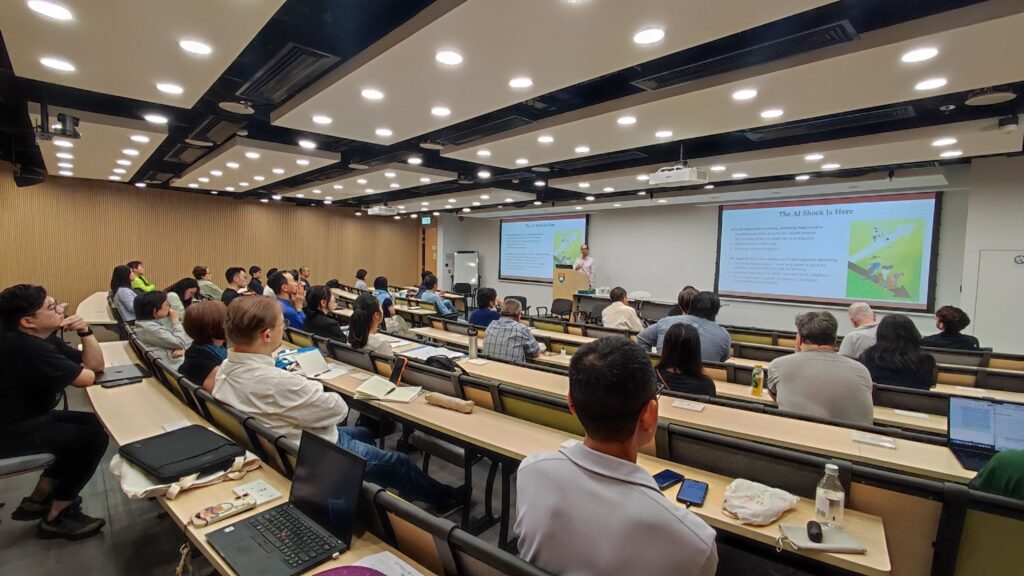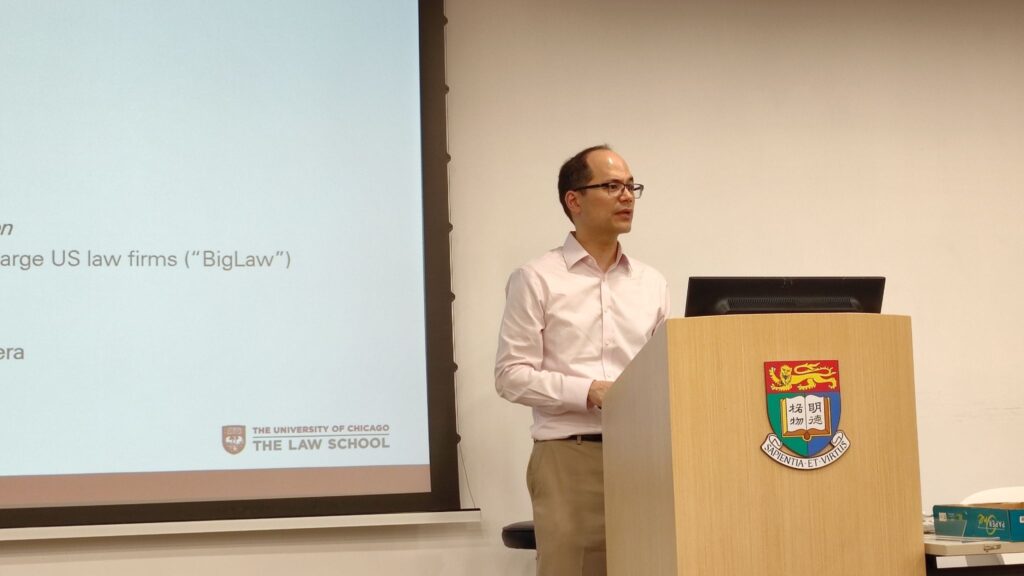
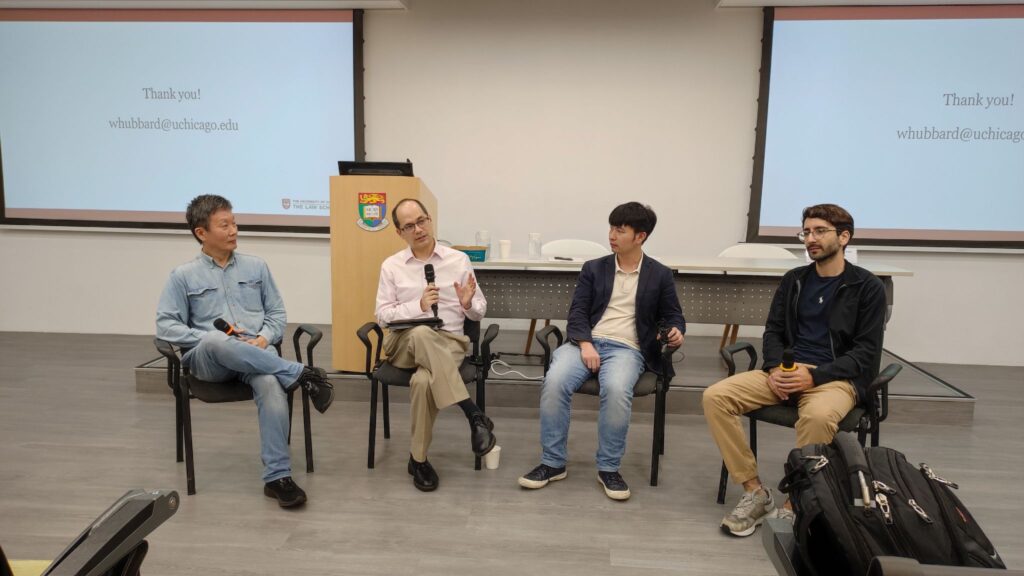
The Law and Technology Centre, HKU Faculty of Law was delighted to host Professor William Hubbard, Deputy Dean, Clifton R. Musser Professor of Law and Economics, The University of Chicago, for a timely and thought-provoking roundtable on “AI in Legal Education”.
Professor Hubbard examined how generative AI is reshaping legal practice, legal education, and the formation of future lawyers. He highlighted a central challenge posed by AI: while it can improve productivity and make legal work faster, excessive reliance on it may reduce the effort, experimentation, feedback, and sustained practice that meaningful learning requires.
The talk explored the range of approaches being adopted by US law schools—from prohibiting AI use or leaving decisions to individual faculty members, to introducing AI-literacy courses and redesigning teaching so that students learn both with and without AI.
Drawing on the University of Chicago’s approach, Professor Hubbard discussed three priorities for legal education in the AI era:
- Developing AI-resilient teaching methods that discourage overreliance on technology;
- Teaching the effective and ethical use of AI in classrooms and clinical settings;
- Preserving the “essential human” dimensions of law as a human-centred profession.
The discussion was further enriched by Professor Daniel Seng of the National University of Singapore, Dr Jakob Merane of ETH Zürich, and Professor Benjamin Chen of HKU Faculty of Law, who brought insights drawn from their own research and experience. Their contributions introduced additional perspectives on how universities, educators, and legal professionals are responding to the opportunities and challenges created by generative AI.
We extend our sincere thanks to Professor Hubbard, Professor Daniel Seng, and Dr Jakob Merane for sharing their expertise and perspectives with the HKU Law community.